“The approval-first workflow makes automation feel practical. We can review budget and campaign changes before they go live without losing the speed of an AI ad manager.”

Maya Chen
Paid Media Lead · Illustrative profile

Plan, launch, analyze, and optimize paid media from one operating layer. This guide explains how AI ad tools connect campaign execution with creative learning and revenue signals.
Explore the AdBid AI advertising platformTurn a business goal into structured campaigns, creative tests, approval steps, and channel-ready execution.
Bring spend, attribution, revenue, cohorts, and predicted lifetime value into the same decision process.
The strongest ads management tools do more than display dashboards. They connect strategy, campaign creation, creative production, monitoring, and measurement so every decision uses the same operating context.
A unified AI ad manager reduces tab switching and keeps campaign structures consistent across Meta, Google, TikTok, and connected analytics systems.
AI ads automation should operate inside explicit boundaries: budget caps, CPA targets, approval modes, stop-loss rules, permissions, and an emergency stop.
Good ad analytics connect platform delivery with attribution, subscriptions, revenue, cohorts, and LTV instead of optimizing only for cheap clicks.
The objective is not automation for its own sake. It is faster, more consistent, and more accountable paid-media execution.
See AI Media BuyingDifferent workflows need different levels of automation. These six areas form a practical foundation for evaluating advertising management software.
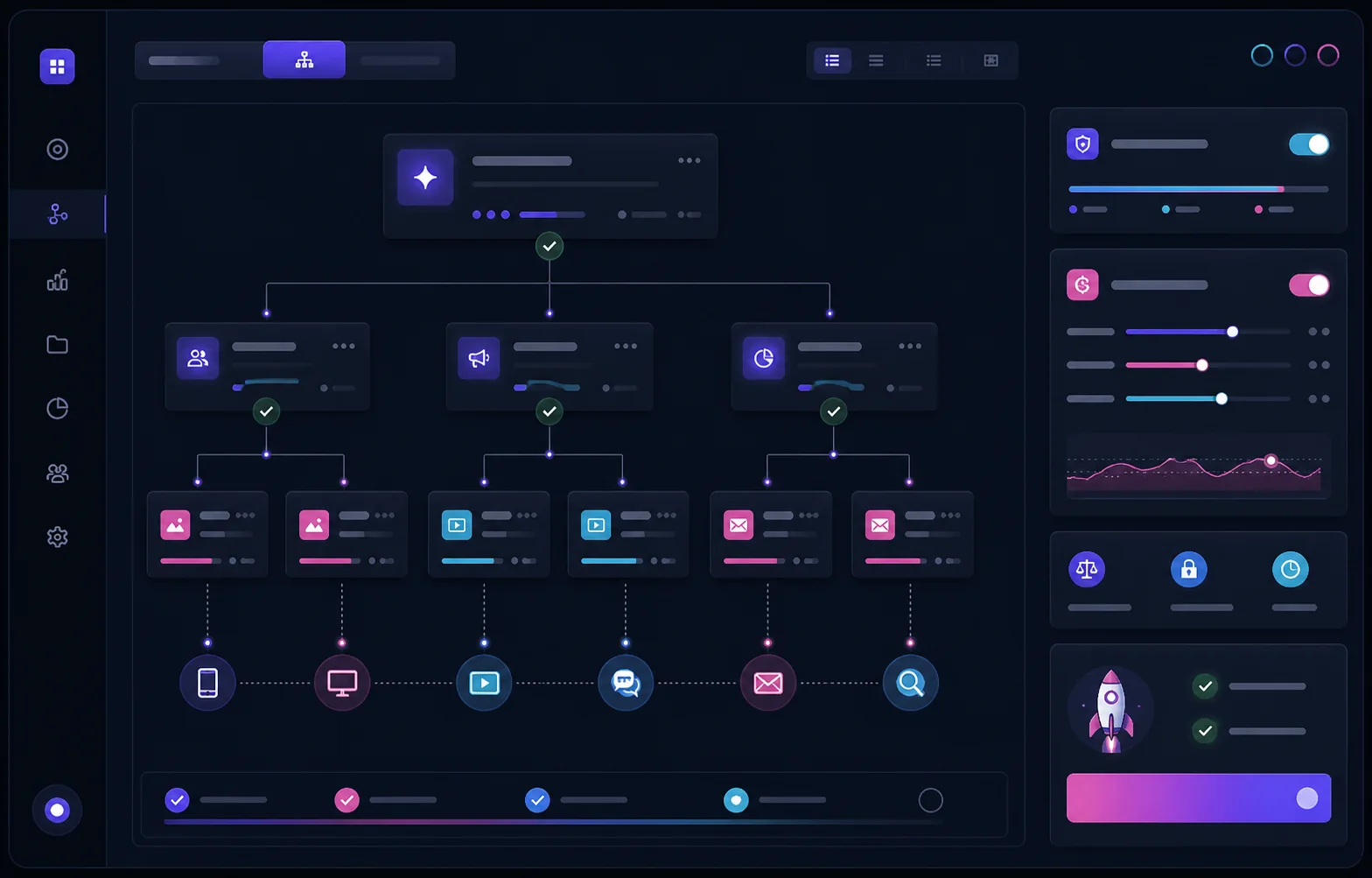
Create clean campaign structures, apply naming standards, review settings, and publish through controlled workflows.
Monitor delivery, find waste, manage creative-to-audience combinations, and optimize campaigns inside defined rules.

Generate variants, compare concepts, detect fatigue, and turn winning patterns into the next creative brief.
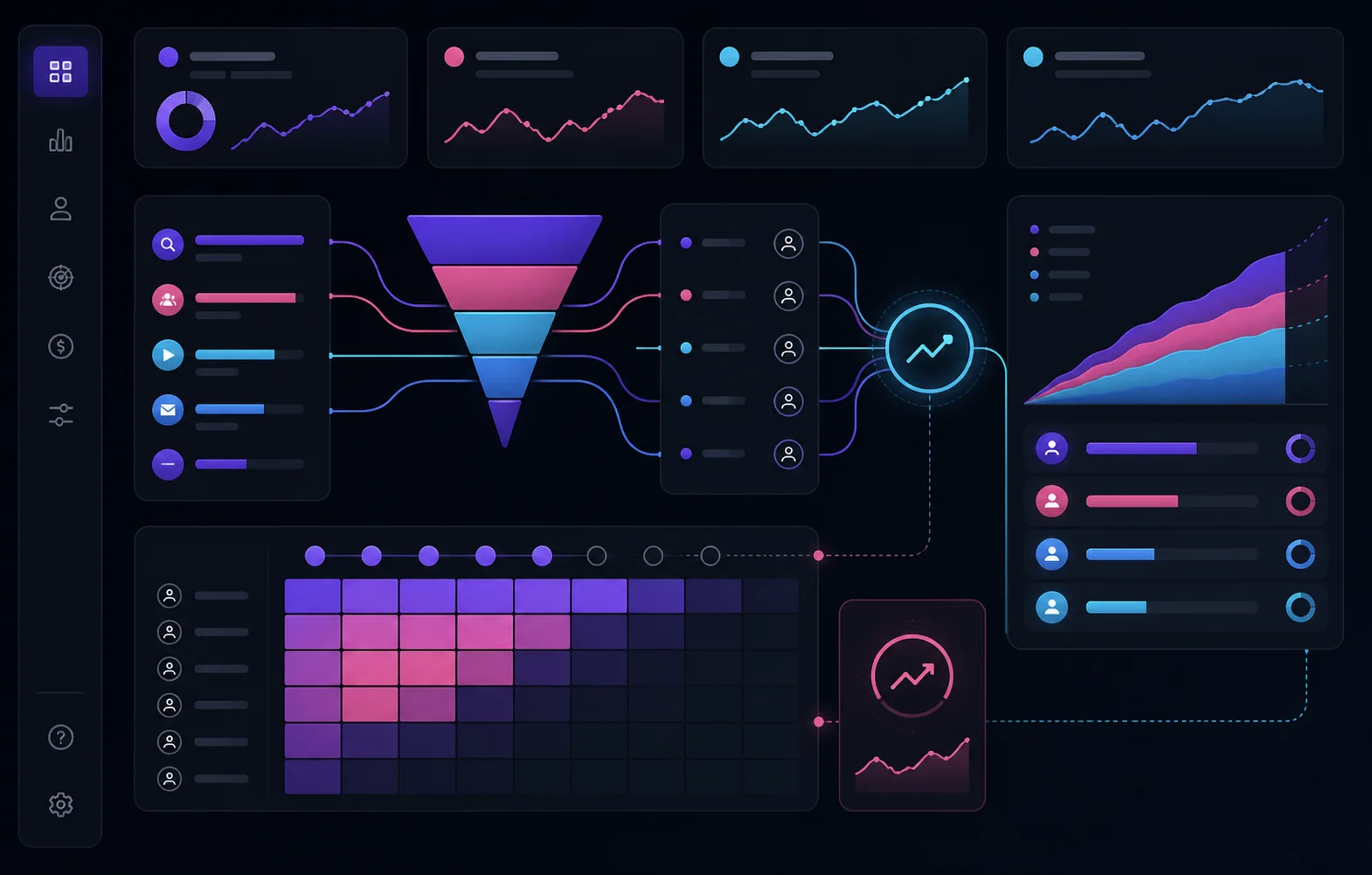
Compare campaigns using spend, conversion quality, retained revenue, payback, and predicted lifetime value.

Ask an AI assistant for accounts, campaigns, insights, spend, and revenue context through a secure read-only connection.
Coordinate Meta, Google, and TikTok activity while maintaining shared budgets, goals, and measurement standards.
A reliable workflow moves from business context to execution, then turns measured outcomes into the next decision.
Define the objective, target CPA, budget, markets, offer, channel mix, approval mode, and stop conditions before an agent acts.
The system assembles campaign structure, audiences, placements, copy, and creative variants using current account context.
Operators preview changes, inspect settings, approve actions, and publish to connected ad accounts without losing an audit trail.
Delivery, attribution, revenue, and LTV signals identify waste and winners. The evidence feeds the next budget move and creative test.
Illustrative feedback based on common workflows teams evaluate when adopting AI-powered advertising management.
“The approval-first workflow makes automation feel practical. We can review budget and campaign changes before they go live without losing the speed of an AI ad manager.”
Maya Chen
Paid Media Lead · Illustrative profile
“Connecting campaign performance with revenue and LTV gives us a much better scaling signal than platform ROAS alone. The decision trail also makes reviews easier.”

Arjun Mehta
Growth Marketing Manager · Illustrative profile
“One shared workspace for creative testing, campaign execution, and analytics reduces handoffs across our agency team. Guardrails keep every account manageable.”

Daniel Brooks
Agency Operations Director · Illustrative profile
AdBid combines campaign execution, creative generation, media buying, analytics, attribution, and AI agents in one paid-media platform.
The right feature set should connect decisions with execution while keeping operators in control.
Produce channel-ready variants, compare angles, monitor fatigue, and send evidence back into the next creative brief.
Build repeatable campaign structures, prepare assets and copy, and publish reviewed changes across connected accounts.
Monitor performance continuously, recommend actions, and automate approved workflows within budget and policy constraints.
Connect spend with attribution, revenue, cohorts, refunds, subscriptions, payback, and predicted lifetime value.
Choose recommendation-only, approve-first, or guarded autopilot workflows and retain a record of every decision and action.
Use a Meta Ads MCP to ask an AI assistant for campaign structures, spend, performance insights, and revenue context.
Meta, Google, and cross-channel campaigns expose different signals and constraints. A good system adapts its workflow accordingly.
Coordinate creative testing, audience structures, placements, fatigue detection, budget movement, and Facebook ad optimization.
Support campaign structure, search and creative workflows, budget monitoring, conversion quality analysis, and controlled optimization.
Connect an AI assistant to read advertising accounts, campaigns, insights, spend, creative performance, and downstream revenue signals.
Compare opportunities across channels, move budget toward verified value, and keep every automated decision visible and reversible.
Clear answers for teams evaluating campaign automation, analytics, and AI media buying software.
They help teams create, organize, monitor, analyze, and optimize paid advertising campaigns. More advanced platforms also connect creative production, attribution, revenue, and automation.
AI can support campaign building, monitoring, creative analysis, recommendations, and guarded actions. Teams should still define budgets, permissions, approval rules, and stop conditions.
A Meta Ads MCP connects an AI assistant to advertising data through the Model Context Protocol. It can make campaign information and performance insights available through natural-language questions.
Yes, depending on the platform. Common workflows include campaign preparation, monitoring, reporting, budget rules, anomaly detection, and optimization recommendations.
CPA and ROAS are useful, but stronger decisions also consider attribution quality, revenue, refunds, retention, cohorts, payback, and customer lifetime value.
No. A platform provides software and automation; an agency provides managed services. In-house teams and agencies can both use an AI advertising platform to increase operating leverage.
